Dionysus, our intrepid enabler
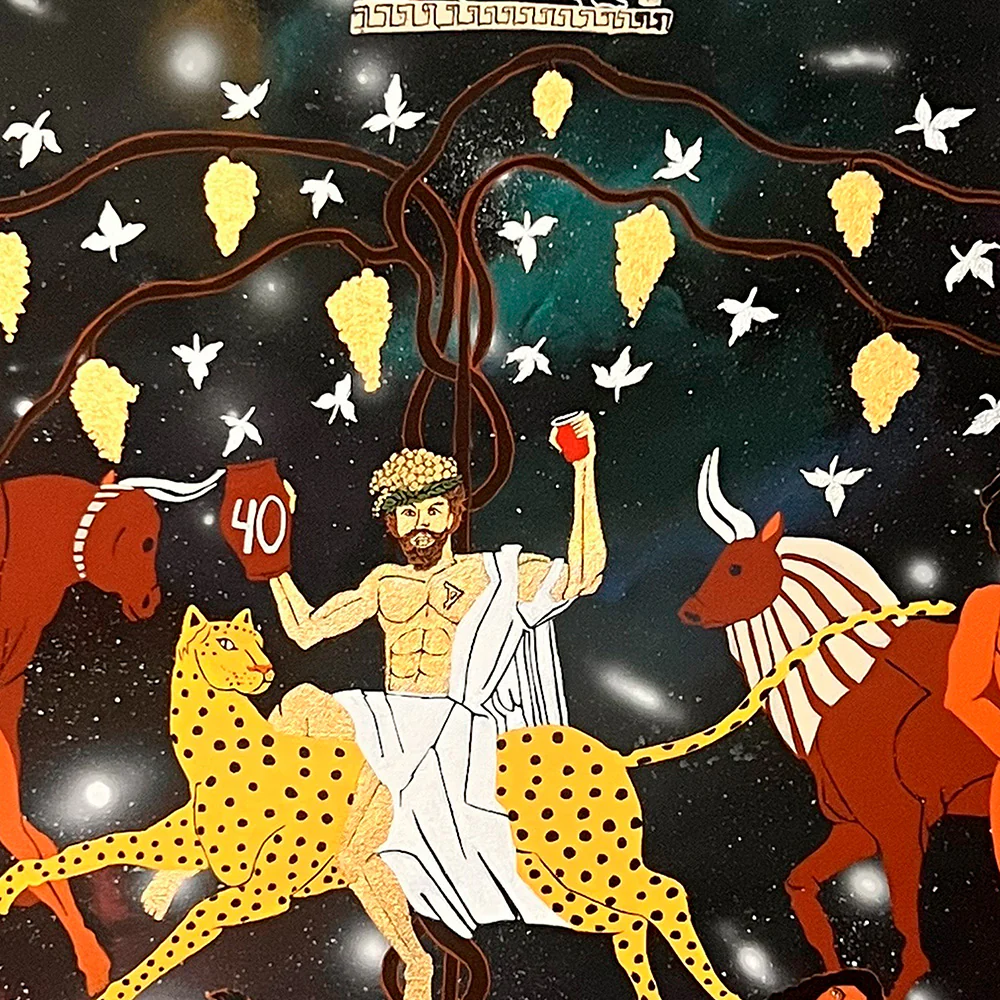
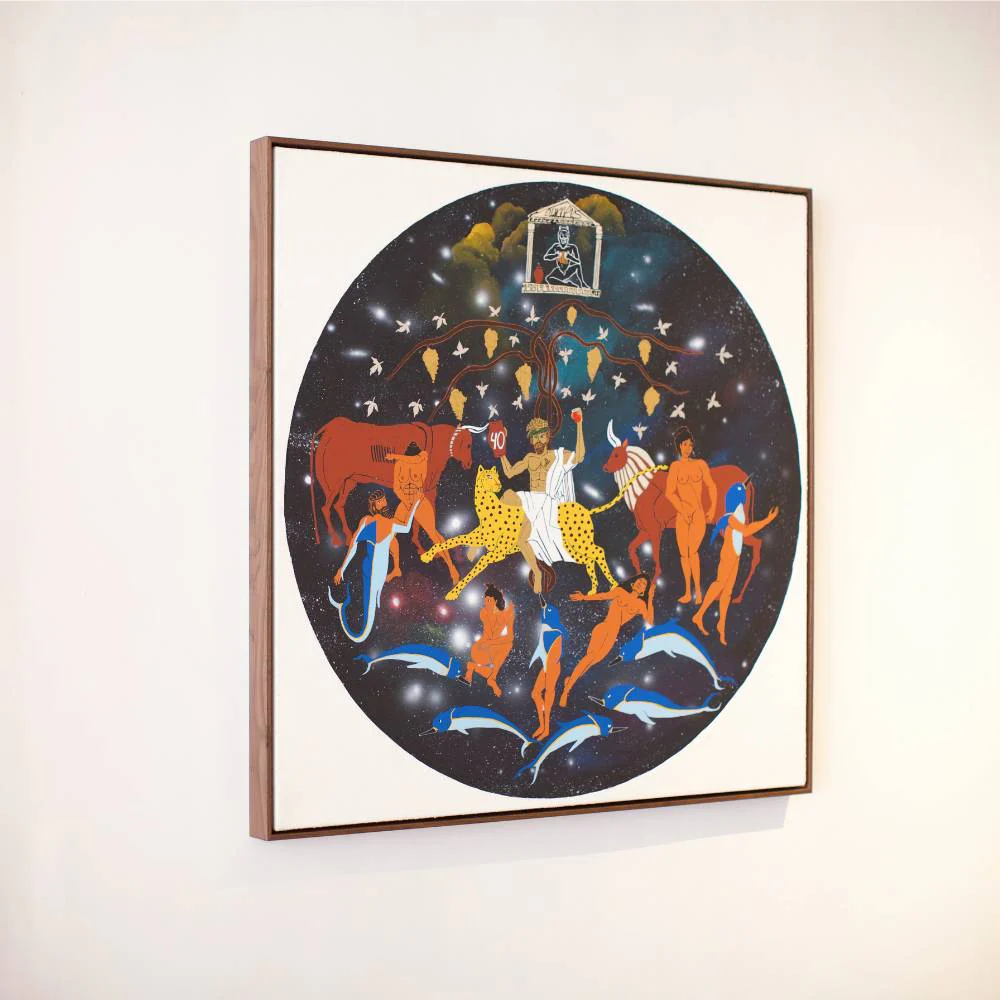
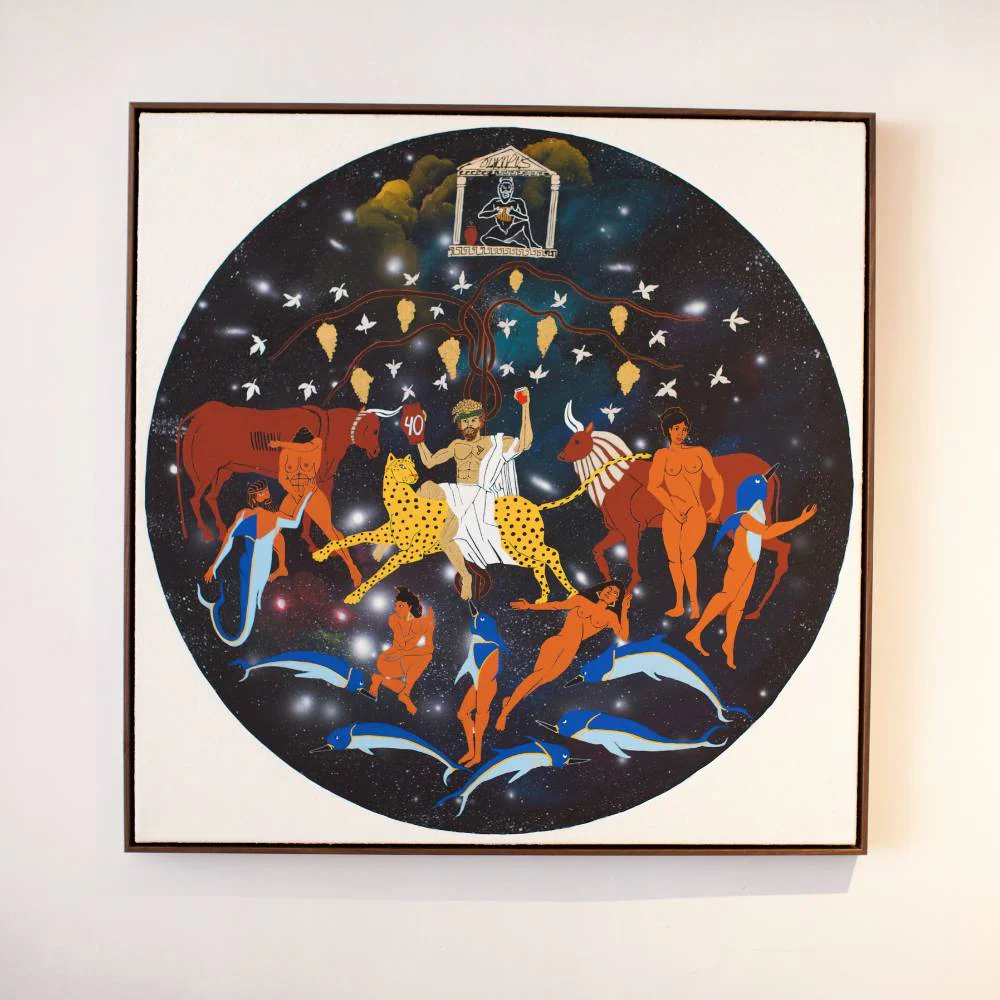
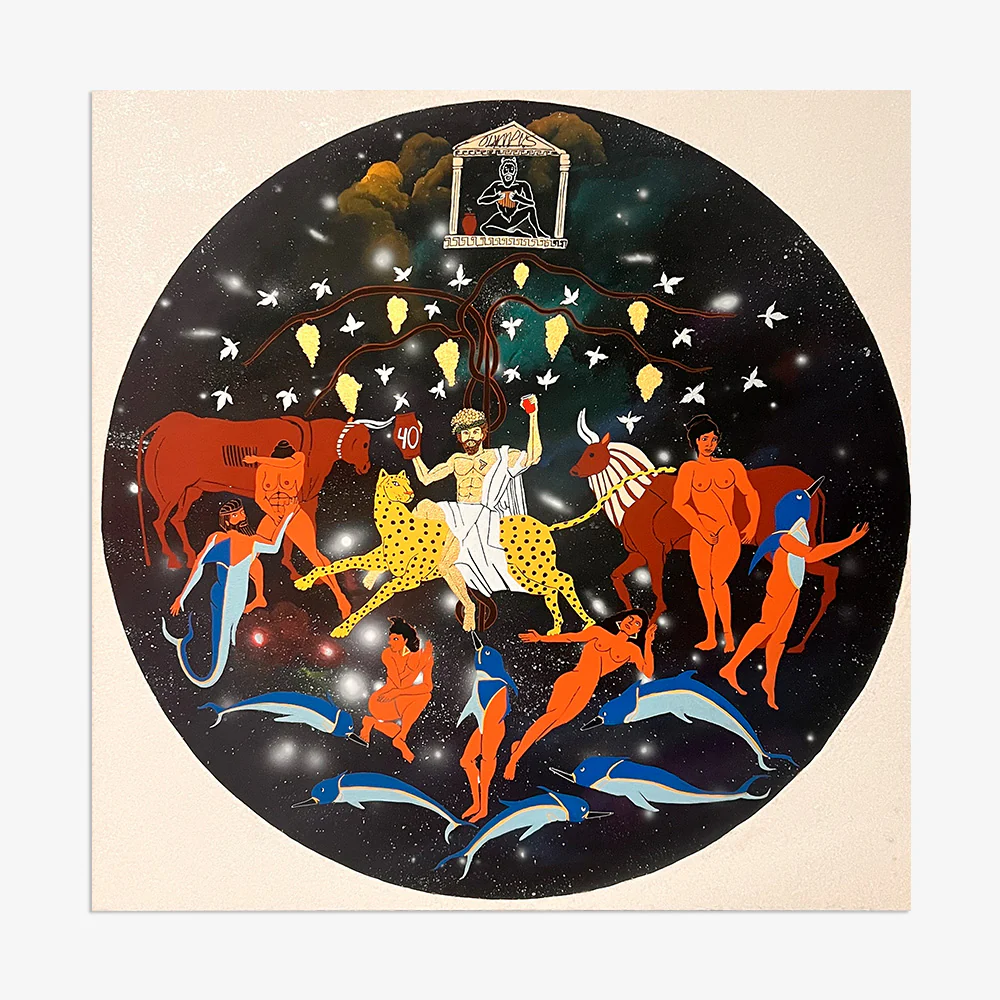
Umar Rashid continues his signature world-building—collapsing classical mythology, pop culture, and revisionist history into dense, irreverent tableaux that defy linear time. In this work, Rashid turns his focus to decadence, staging a raucous gathering presided over by a triumphant Dionysus. The god of wine and excess commands the scene with such gravitational pull that even Zeus—usually a symbol of divine order—has relinquished his authority, serenading the chaos below with a flute rather than a staff.
Rashid’s subversion extends to the sea: the traditionally female-coded mermaids and sirens are reimagined as dolphin-men, drawn to the revelry above, longing not to become the women they observe, but to join with them. Their desire is mythic, mating, and primal—a force that propels them toward the surface, into a party that collapses time and cosmology. As ever, Rashid blurs the boundaries between epic and absurd, rewriting the terms of power, desire, and myth through a lens that is as historical as it is hallucinatory.
Original: $30,700.00
-65%$30,700.00
$10,745.00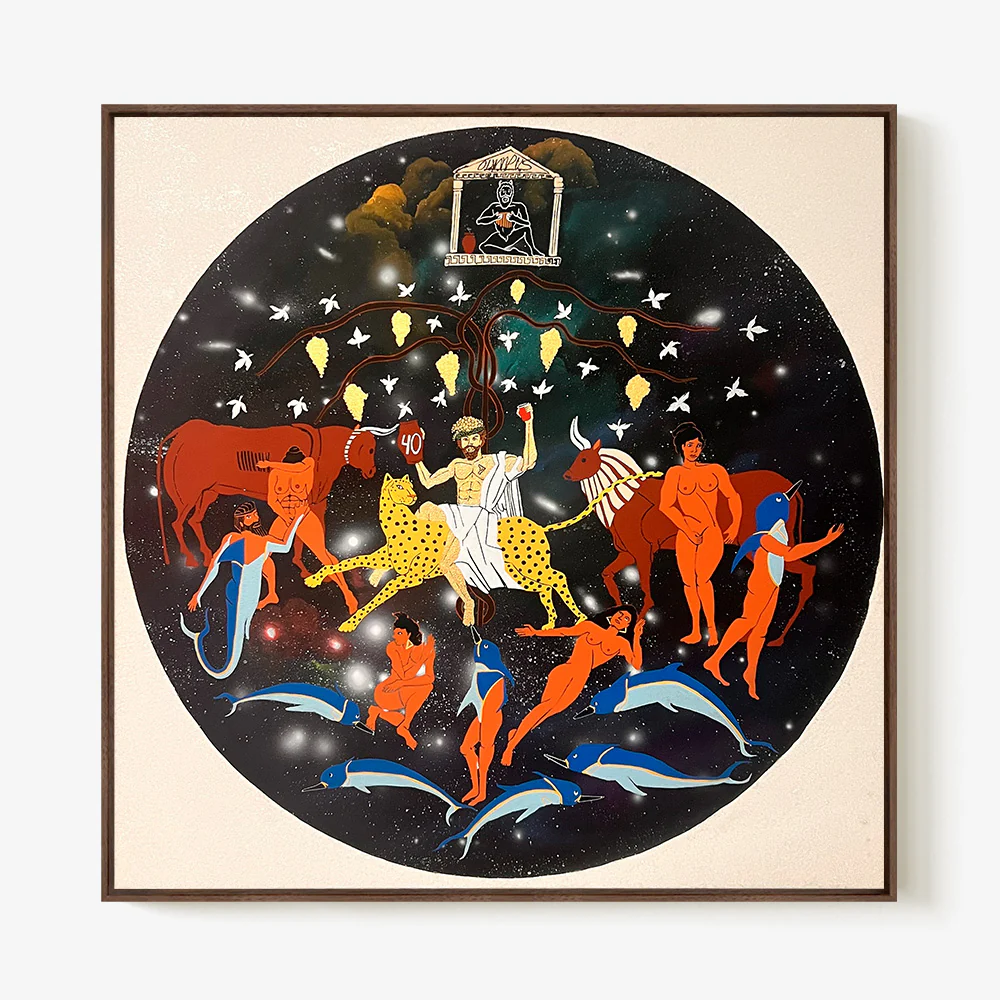
Description
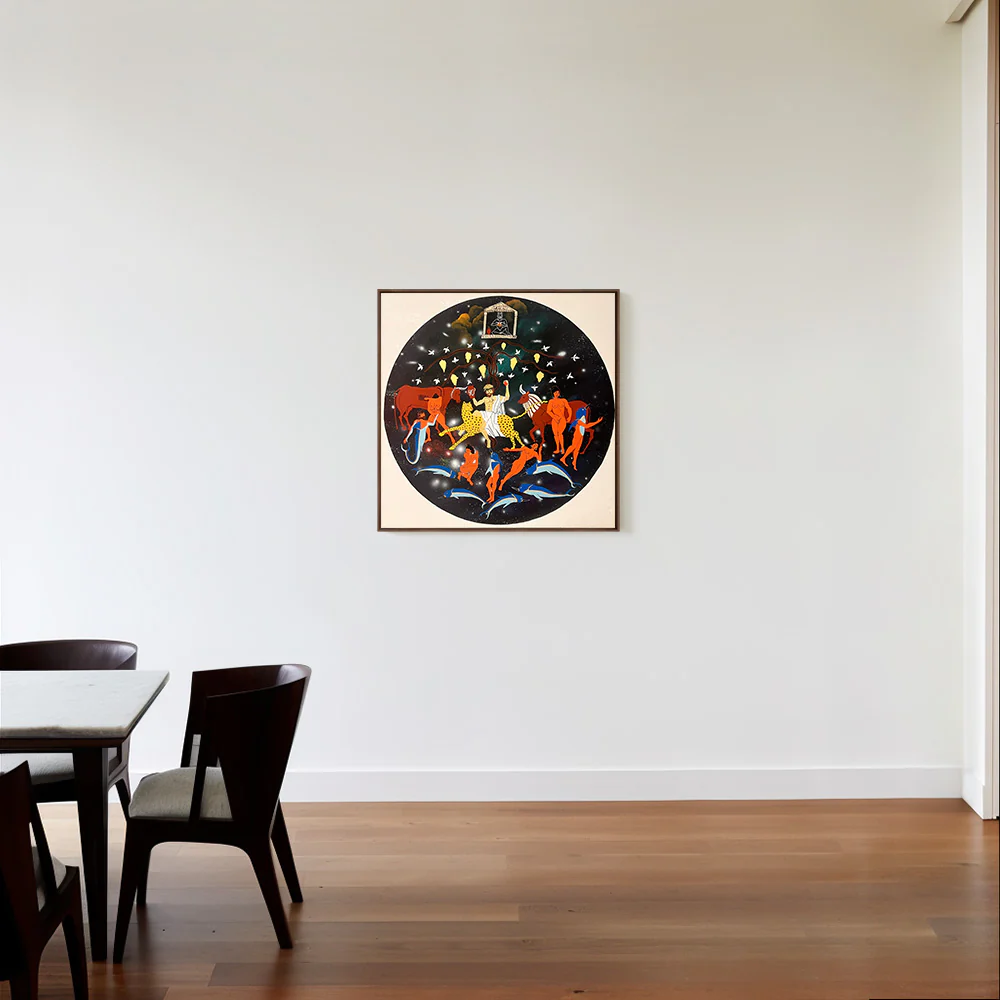
Umar Rashid continues his signature world-building—collapsing classical mythology, pop culture, and revisionist history into dense, irreverent tableaux that defy linear time. In this work, Rashid turns his focus to decadence, staging a raucous gathering presided over by a triumphant Dionysus. The god of wine and excess commands the scene with such gravitational pull that even Zeus—usually a symbol of divine order—has relinquished his authority, serenading the chaos below with a flute rather than a staff.
Rashid’s subversion extends to the sea: the traditionally female-coded mermaids and sirens are reimagined as dolphin-men, drawn to the revelry above, longing not to become the women they observe, but to join with them. Their desire is mythic, mating, and primal—a force that propels them toward the surface, into a party that collapses time and cosmology. As ever, Rashid blurs the boundaries between epic and absurd, rewriting the terms of power, desire, and myth through a lens that is as historical as it is hallucinatory.